
Sheboygan Directory Books by Year
Sheboygan city directory research has two strong entry points. The Mead Public Library genealogy collection keeps city and county directories and phone books alongside local newspapers, maps, census film, and yearbooks. The University of Wisconsin digital collection supplies page images for 25 city and county directory items. Its catalog confirms a changing line of publishers rather than one unbroken annual series. Record the full title and year because Wright's, Pott's, Zorn's, and locally published editions do not always arrange material the same way.
| Collection | Years | Where Held | Access |
|---|---|---|---|
| Pryor & Co. city directory | 1875-76 | UW collection and Mead | Digital item lead and library help |
| A.G. Wright and Wright's editions | 1884, 1886, 1887-88, 1891-94 | UW digital collection | Free page-level viewing |
| Pott's directories | 1895-98, 1902, 1904-05 | UW and Mead collections | Digital and library access |
| City-and-county, Zorn's, local, and Wright's titles | 1908-20 verified examples | UW digital collection | Free online inspection |
| Phone books and later directories | Phone books through 1957 | Mead second floor | Ask the research desk |
The public sources do not establish a complete, continuous run after 1920. Do not fill a missing year by assuming that an edition was issued. Ask Mead or the Sheboygan County Historical Research Center to confirm a volume. A city directory is a publication snapshot, not an official census. Two editions can bracket a move, but they do not prove that a person stayed at the address every day between them.
Mead's Sheboygan Directory Shelf
Mead's core genealogy material is on the second floor at 710 N 8th Street. The library lists city and county directories, phone books, English and German newspapers dating from 1838, local histories, church histories, two church microfilm reels, yearbooks, atlases, platbooks, passenger lists, and family genealogies. U.S. Census microfilm covers 1820 through 1920 except 1890, which was destroyed by fire. That gap matters when a directory listing falls near the missing census.
The desk can also explain licensed databases. Ancestry Library Edition is for library use, while remote Newspaper Archive access requires a Mead card. The library lists hours of Monday through Thursday, 9 a.m. to 8 p.m., and Friday and Saturday, 9 a.m. to 5 p.m.; Sunday is closed. Call 920-459-3400 before traveling when a particular directory year is essential.
The Mead genealogy page shows the research setting and available collections.
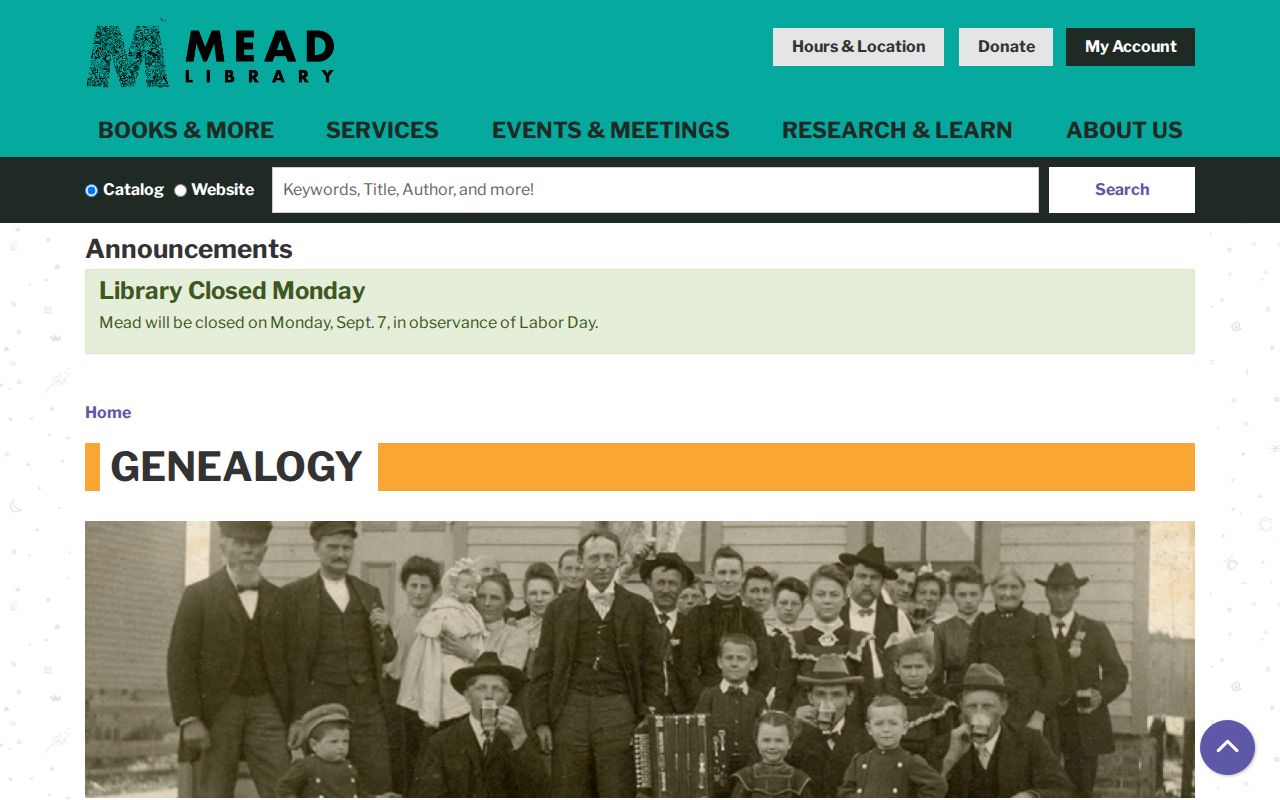
The image points to a mixed-source workflow: directory pages work best beside census, newspaper, church, and map records kept by the same research desk.
Open Sheboygan Directories Online
The UW digital Sheboygan directory collection is the fastest way to inspect a page without a library trip. It includes 25 volumes or items, among them the digitized 1884 A.G. Wright directory. Use the catalog metadata and the scanned page together. Save the directory title, publisher, publication year, page number, and stable item identifier.
Search text can be imperfect on old type. Browse the alphabetical pages when a surname search fails, and check likely spelling variants. Then look for a street section or business listing in the same volume. Never quote an abbreviation as a fact until the volume's key explains it. The research did not capture a reliable exact entry transcription, so unfamiliar marks should stay unresolved rather than guessed.
Read a Sheboygan Directory Entry
A Sheboygan city directory entry must be read in its own edition. The inspected sources support recording the fields below, but they do not support assigning a fixed meaning to every symbol across all publishers. Start with the alphabetical name entry. Then check the street-order material, if the volume has it, and any business or professional section.
| Name and spelling | Copy the alphabetic entry exactly, including initials and variants. |
|---|---|
| Work or organization | Record an occupation, firm, or organization only when printed. |
| Place | Save the house number, street, apartment, ward, or other place notation. |
| Listing type | Distinguish a residence entry from a business, professional, or telephone listing. |
| Edition evidence | Keep title, publisher, year, page, symbols, and any removed or new mark. |
- Criss-cross directory
- A directory arranged by street and house number rather than only by surname. Availability must be checked for each Mead or SCHRC volume.
- Householder index
- A name or address finding aid for people listed as connected to a household. It is not proof of ownership.
- Abbreviation key
- The publisher's legend for shortened words and symbols. Save it before interpreting an entry.
A directory can associate a person with a place in the publication year. It cannot by itself show continuous occupancy, legal title, or an exact move date. Compare at least two editions and one different source before stating a timeline.
Confirm Sheboygan Names in Print
Newspapers can explain why a name enters or leaves a city directory. Mead lists the Sheboygan Press from December 17, 1907 to the present, plus a separate digitized Press collection for 1909-1976. The manually built Press index covers 1940-2008. A distinct obituary index covers 1968-1995, and SCHRC now maintains the obituary index.
Earlier local titles widen the search. Mead identifies the Sheboygan Telegram for 1887-1921, Sheboygan Daily Press for 1909-1910, Sheboygan Evening Press for 1912, and Sheboygan Mercury for 1848-1860. English and German newspapers reach back to 1838. Search both language traditions when a family name or street spelling changes. An article date is a lead, not a substitute for the printed directory page or an official certificate.
Sheboygan Archives Beyond Mead
The Sheboygan County Historical Research Center holds city directories with family genealogies, biographies, diaries, marriage-license applications, maps, photos, newspaper files, yearbooks, company catalogs, plat maps, WPA projects, and World War II material. These collections can connect a directory name to a family, school, firm, or parcel without treating any one source as complete.
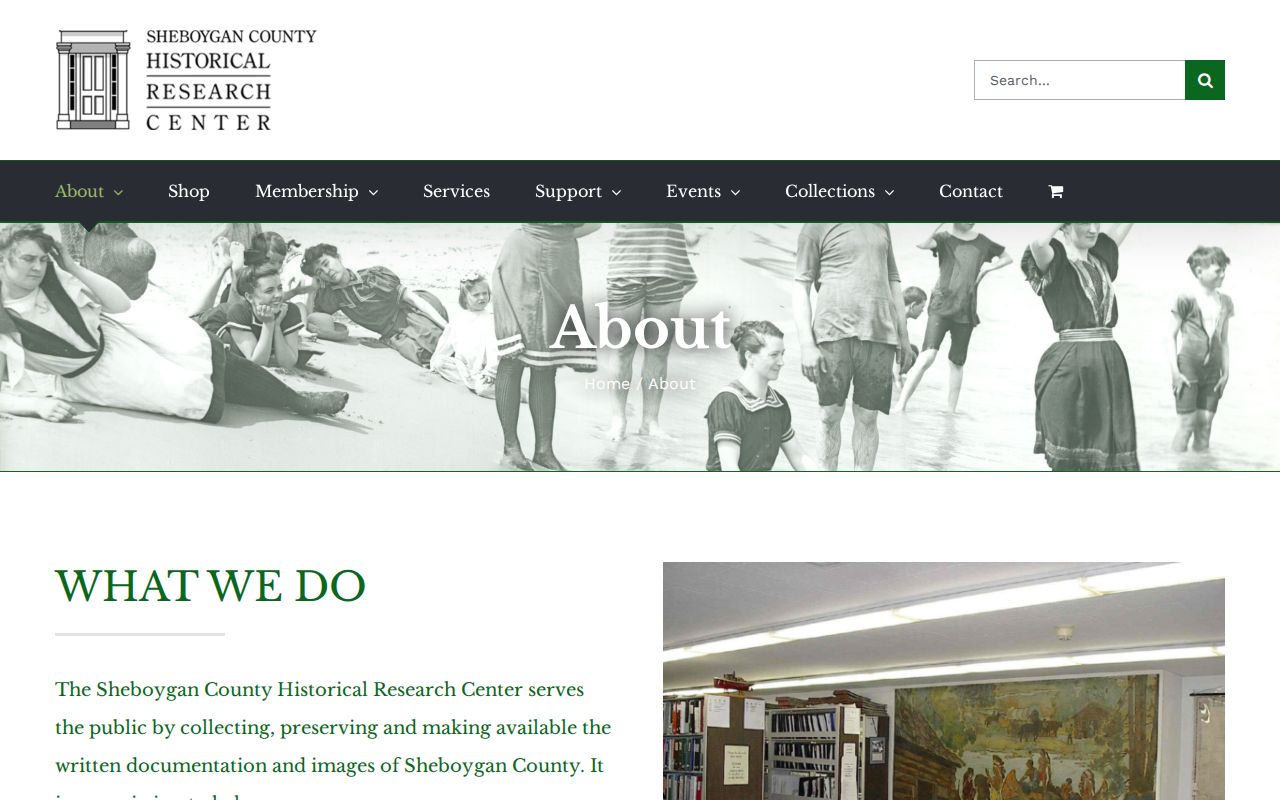
The holdings image shows why the center is useful when an online name search stops at a brief citation.
SCHRC accepts requests at research@schrc.org or 920-467-4667. Its listed research rate is $30 per hour plus copies and postage, while an obituary lookup is $2. The center is at 518 Water Street in Sheboygan Falls and lists Tuesday through Friday, 9 a.m. to 4 p.m., with Saturday by appointment. The Wisconsin Historical Society adds the Wisconsin Name Index, pre-1907 vital entries, archival finding aids, and full microfilm in its Madison research room. A WHS index can be abbreviated or uncertified, so carry the item, volume, and page identifier into the next request.
Sheboygan Directory Publishing Timeline
The surviving title points show changes in publisher and scope. They should be treated as verified examples, not proof of annual publication.
| 1875-76 | Pryor & Co.'s early Sheboygan city directory. |
|---|---|
| 1884-94 | A.G. Wright and Wright's titles appear in verified digital items. |
| 1895-1905 | Pott's editions supply several comparison points. |
| 1908-20 | City-and-county, Zorn's, Sheboygan Publishing Company, and Wright's titles are documented. |
| Through 1957 | Mead reports phone-book holdings, while an exact continuous later run remains unconfirmed. |
County recordkeeping also shifted. Land e-recording began in 2008, the first e-recorded deed followed in 2010, and recent county projects have scanned or back-indexed other records. Printed directories remain vital because modern tax and GIS systems are not continuous historical household ledgers.
Map Sheboygan Directory Addresses
An old house number needs place evidence as well as a printed name. Mead's mid-nineteenth-century atlases, maps, and platbooks can place roads, lots, and property patterns near the directory year. The Library of Congress holds a public-domain ten-sheet Sanborn fire-insurance map set for Sheboygan dated January 1884. A Sanborn sheet can show a block, building footprint, number of stories, construction material, and use recorded at that time. It does not identify every occupant or establish later ownership.
Start with the city directory address and year. Find the same block on the closest map, then compare the legal description or parcel history when a modern number no longer resolves. The research found no definitive official Sheboygan street-renumbering crosswalk, so a number change must be documented through block, lot, deed, plat, directory, and newspaper evidence. Avoid joining records only because two house numbers look similar.
Mead yearbooks and church records can add another kind of association. Its church collection includes local histories and two microfilm reels, while area high-school yearbooks can help distinguish people with the same name. SCHRC also keeps most local high-school yearbooks, company material, photos, and family files. Each item needs its own date and source label. Together, those records can confirm a period connection without turning a directory entry into proof of continuous residence.
Trace Family in Sheboygan Directories
Use city directories to build a dated sequence, then test it against sources created for other purposes. A directory may show an address between federal census years. A newspaper may explain a move or death. A platbook or Sanborn map can place the building, while a deed identifies legal title. The Sheboygan resident lookup workflow is useful when a historical name must be checked against a modern official index.
- Begin with the closest verified year and surname spelling. Save the edition and page, even if the entry seems obvious.
- Check the prior and next available editions. Note each address, work label, household mark, and spelling change separately.
- Inspect street-order or criss-cross material only if that volume includes it. Compare nearby listings without assuming kinship.
- Pair the run with federal or Wisconsin census film. Mead has U.S. Census film through 1920 except the lost 1890 census.
- Use newspapers, obituary indexes, church material, vital indexes, yearbooks, and family files to explain a gap or departure.
A missing name has several possible causes: the household moved, the person died, the compiler omitted the listing, the spelling changed, or the relevant volume is absent. Log the finding as “not located in this edition” instead of turning silence into a life event. For a place-centered inquiry, use the Sheboygan street directory process after identifying the modern address and parcel.